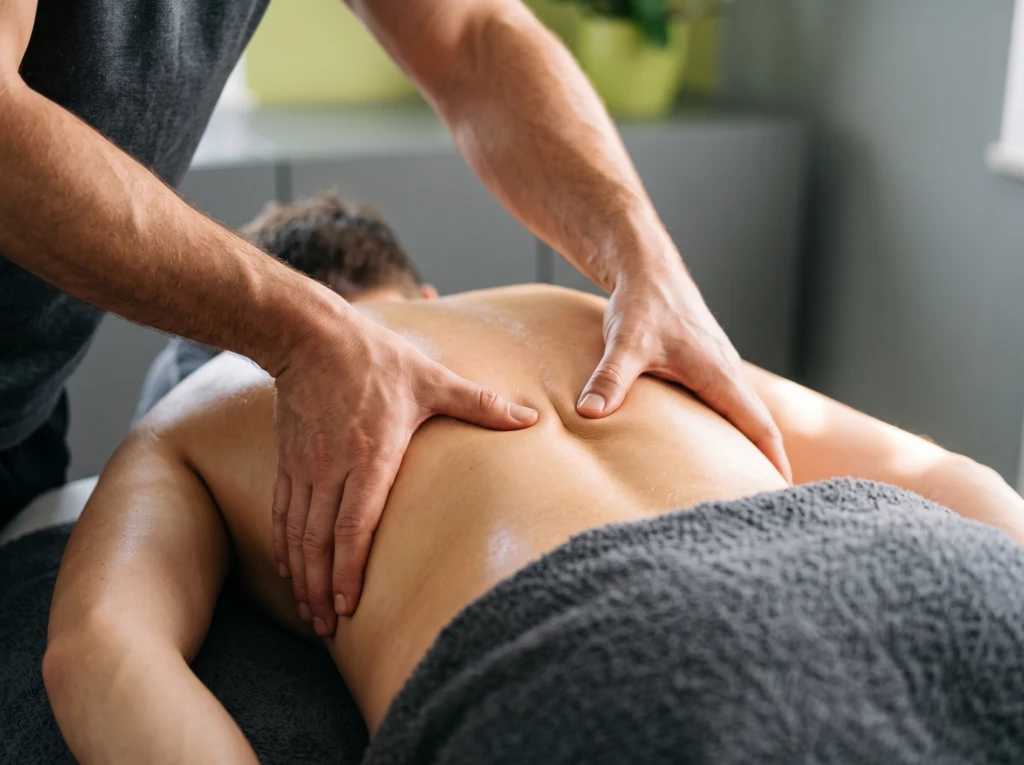
Therapeutic massage in Sofia is a full-body massage aimed at one specific problem, most often pain in the back, lower back or neck. What sets it apart from an ordinary massage is that Kaloyan Zarkov is a kinesitherapist (physiotherapist). He first works out where the pain comes from, then massages in a way that targets it. Therapeutic massage for the back and neck is one of the most common reasons people come to the practice.
What to expect
Before the massage, Kaloyan asks what hurts, how long it has been hurting and which movements make it worse. If needed, he also checks how you move. The massage is on a treatment table, with oil, and you undress to your underwear.
Kaloyan massages the whole body but spends more time on the problem areas. He uses classic techniques: stroking, rubbing, kneading and vibration. On tight spots he holds pressure on the painful points in the muscle (trigger points) and adds a gentle stretch. The pressure is medium to firm, depending on the problem and how you feel.
Afterwards your muscles are usually more relaxed and movement feels freer. Sometimes an area that was very tight is a little tender the next day. For back pain, a series of 4 to 8 massages usually helps. If the pain keeps coming back, Kaloyan will also suggest exercises or kinesitherapy (exercise and manual therapy).
What it helps with
- Back and lower back pain from tense muscles
- A stiff neck and shoulder pain
- Headaches that start in the neck
- Muscle spasms and “seizing up”
- Stiff joints from wear (osteoarthritis)
- Muscles that stay tight after an injury that has already healed
Who is this massage for?
- You have a specific pain and want the massage aimed at it.
- Your pain is muscular, with no numbness or weakness.
- Massage helps you, but you want it done by someone who understands where the problem comes from.
When it isn’t suitable
- With severe pain and numbness or weakness in the leg or arm. You need an examination first, and often kinesitherapy rather than massage.
- With a fever, a cold or a skin infection.
- With thrombosis or varicose veins in the area.
- After a recent injury with swelling or bruising in the area.
- If you have uncontrolled high blood pressure or cancer, talk to your doctor first.