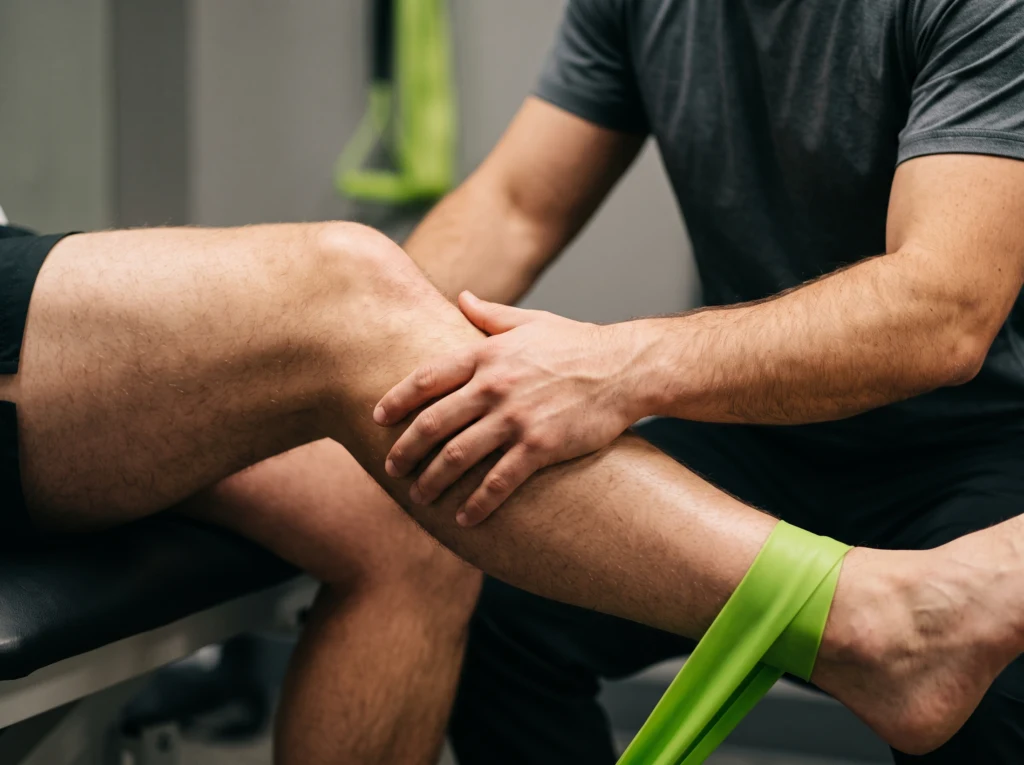
Prehab, or rehabilitation before surgery, prepares your body for the operation ahead. Most often this is surgery on the knee, hip or shoulder. The aim is to go into surgery with stronger muscles, a more mobile joint and a clear idea of what comes next. People who prepare usually cope more easily with the first weeks after the operation.
What to expect
Kaloyan starts with a conversation about your diagnosis, the planned operation and what you find difficult now. Then he checks how far the joint moves, how strong the muscles around it are and how you walk. Bring your scans and your doctor’s report, if you have them.
The sessions are mostly exercise: strengthening the muscles around the joint, improving its range of movement and working on your balance. Kaloyan adds manual therapy when the joint is stiff or the muscles are tight. The exercises are chosen so that they don’t make the pain worse.
Part of the preparation is learning early what you will need afterwards: how to walk with crutches, how to get out of bed and up from a chair, how to climb stairs. We also show you the first exercises you’ll do after surgery. That way, you already know what to do in hospital.
If the operation is a few weeks away, 2–3 sessions a week until then usually work well. Even a few sessions help, because you get a programme to continue at home.
What it helps with
- Preparing for knee surgery: cruciate ligament, meniscus or joint replacement
- Preparing for a hip replacement
- Preparing for shoulder surgery
- Preparing for spinal surgery, if your doctor recommends exercise
- Weak muscles and a stiff joint because of pain that has lasted for months
Who it’s for
- You have an operation booked and want to be in the best possible shape for it.
- Pain has made you protect your leg or arm, and the muscles have weakened.
- You’ll be living alone after the operation and want to be sure you can manage in the first days.
- You are worried about the operation and want to know what to expect.
When it isn’t suitable
- The joint is badly swollen, hot and red, or you have a fever.
- The joint “locks” and you can’t move it. You need to see a doctor first.
- Your surgeon has told you not to put load on the joint before the operation.