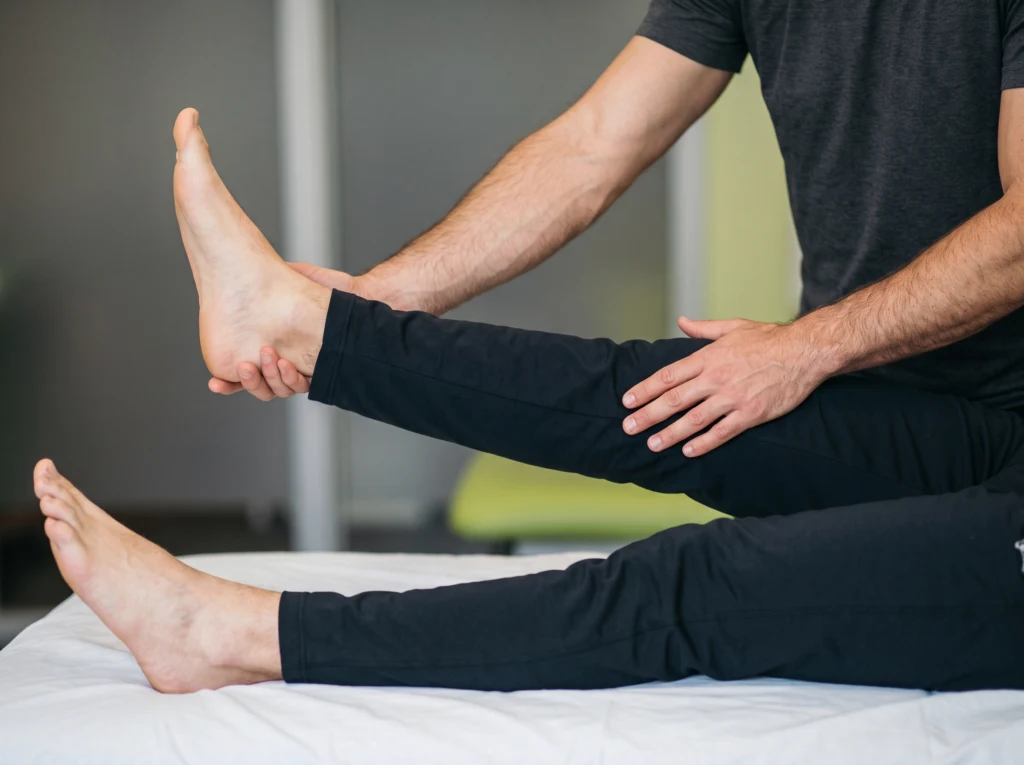
Neuralgia is pain along the course of a nerve. It often burns, “shoots” or feels like an electric shock, sometimes with numbness. The best known is sciatica: pain from the lower back or buttock down the leg. As a treatment for sciatica and other nerve pain, kinesitherapy (exercise and manual therapy) looks for where the nerve is irritated and how to give it more room. Kaloyan Zarkov has experience in neurology and has worked with this kind of pain for years.
What to expect
Kaloyan asks how the pain started, where it spreads and which positions make it worse. Then he checks the movement of your spine and joints, your strength, reflexes and sensation. He also uses tests that gently stretch the nerve, to find out where the problem comes from. The cause may be in the lower back, in the neck or further down, for example in the buttock muscle or in the wrist.
The sessions combine several things. Manual therapy relaxes tight muscles and loosens stiff joints. Special movements that let the nerve “glide” (nerve gliding, or neural mobilisation) help it become less sensitive. Exercises strengthen the muscles that protect the spine. When the pain is strong, Kaloyan may also suggest electrotherapy for relief.
A nerve settles more slowly than a muscle. You usually need 6–10 sessions, 2–3 a week. Numbness is often the last thing to go.
What it helps with
- Sciatica: pain from the lower back or buttock down the leg
- A trapped nerve in the neck, with pain, numbness or weakness in the arm (cervicobrachial neuralgia)
- Pain at the front of the thigh (femoral neuralgia)
- Buttock pain from a muscle pressing on the sciatic nerve (piriformis syndrome)
- Numb fingers (carpal tunnel syndrome)
- Pain between the ribs that gets worse when you breathe or move (intercostal neuralgia)
Who it’s for
- The pain runs down your leg or arm and hasn’t gone away for weeks.
- Your doctor has told you that you have a trapped nerve and recommended kinesitherapy.
- You get pins and needles when you sit for a long time or work at a computer.
- Medication eases the pain, but it comes back.
When it isn’t suitable
- The pain is in the face (trigeminal neuralgia) or has lingered after shingles. Here a neurologist leads the treatment, which is mainly medication.
- Your leg or arm is quickly getting weaker, or you can’t control your bladder. You need an urgent examination by a neurologist and a scan (MRI, CT or X-ray).
- The pain started after a fall or a blow, or comes with a fever.