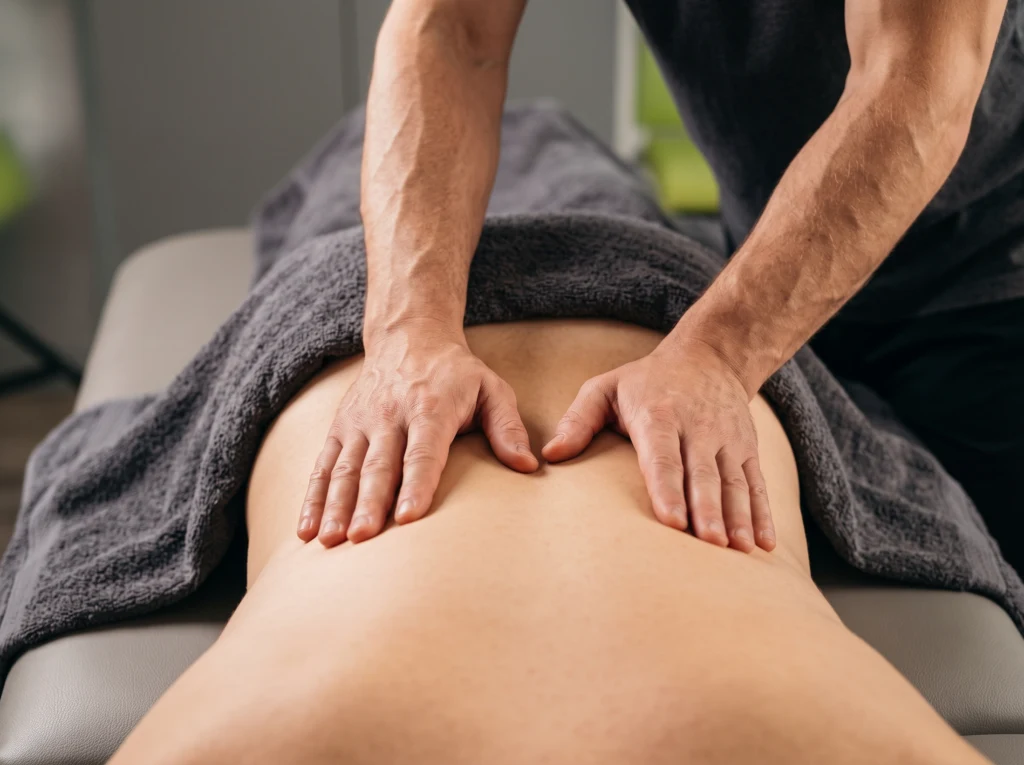
A herniated disc (slipped disc) happens when part of the disc between the vertebrae pushes out and presses on or irritates a nerve. That is why the pain is often not only in the lower back: it can run down the leg, and with a herniated disc in the neck, down the arm. In most people the pain settles over time, even without surgery. Kinesitherapy (treatment with exercise and manual therapy) is the main part of herniated disc treatment without surgery: it helps the pain ease faster and makes it less likely to come back.
What to expect
The first session starts with a conversation: how long you’ve had the pain, where exactly it is, which positions make it worse and which make it better. Bring your MRI or CT scan, if you have one. Kaloyan watches how you move, checks the strength, reflexes and sensation in your leg or arm, and looks for the movements that relieve the pain.
At first, when the pain is strong, the aim is to calm it down. Kaloyan uses manual therapy and the McKenzie method, with gentle movements and positions that reduce the pressure on the nerve. When the pain is milder, the work moves on to exercises for the deep muscles of the abdomen and back and for the mobility of the spine. You will also learn how to sit, bend and lift without bringing the pain on.
Most patients come 2–3 times a week. You usually need about 5 sessions, or more if the pain is stubborn. The pain often eases after about 2 sessions, and the rest are for maintenance. Between sessions you do a short programme at home. It is as important as the work at the practice.
What it helps with
- A herniated disc or disc bulge (protrusion) in the lower back (lumbar)
- A herniated disc in the neck (cervical) with pain or numbness in the arm
- Pain that runs down the back or side of the leg (sciatica)
- Lower back pain that keeps coming back
- Stiffness and fear of movement after an attack of severe pain
- Recovery after herniated disc surgery, once your surgeon allows it
Who it’s for
- Your MRI shows a herniated disc and you want to try without surgery.
- Lower back pain wakes you at night or stops you sitting for long.
- You have sciatica and can’t walk or stand for long.
- Your doctor has recommended kinesitherapy.
- The pain has gone, but you want to lower the risk of another attack.
When to see a doctor first
- You can’t control your bladder or bowels, or you have numbness in the groin area. You need to see a doctor urgently.
- Your leg is getting weaker quickly, for example your foot “drops” when you walk or you can’t stand on your toes.
- The pain comes with a fever or unexplained weight loss.
- The pain started after a fall or a blow.