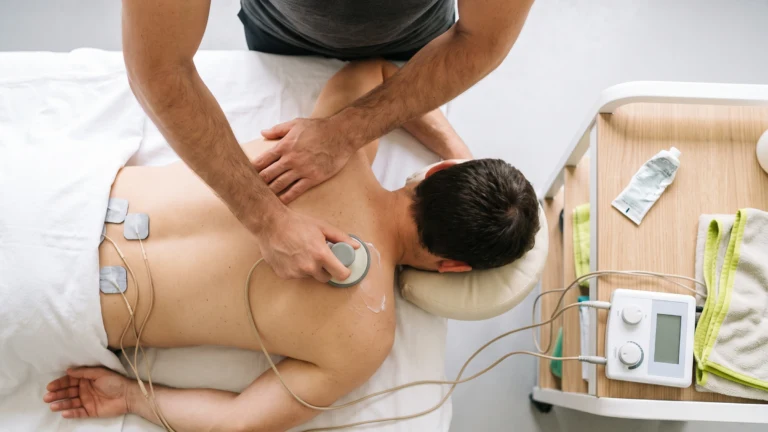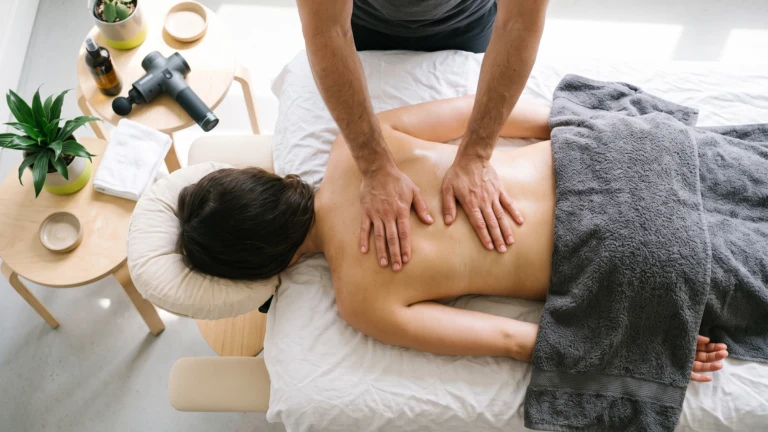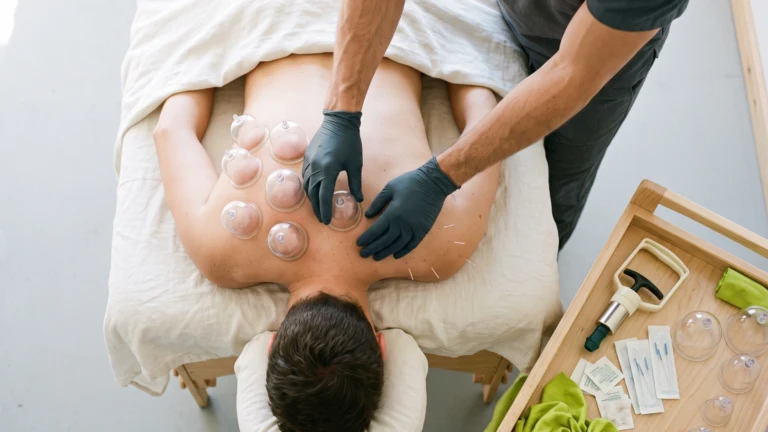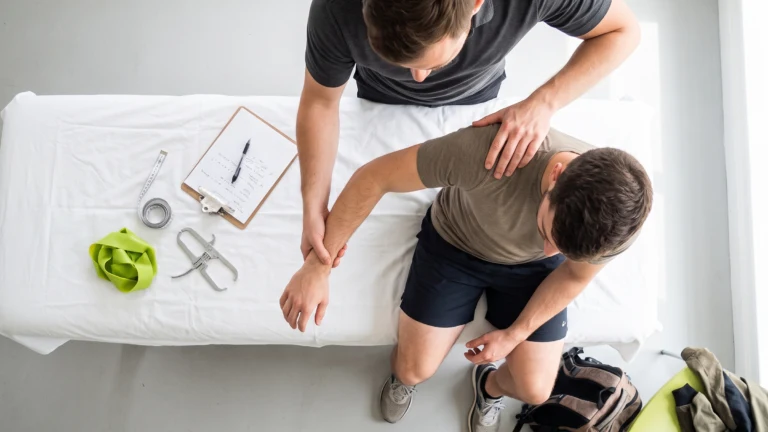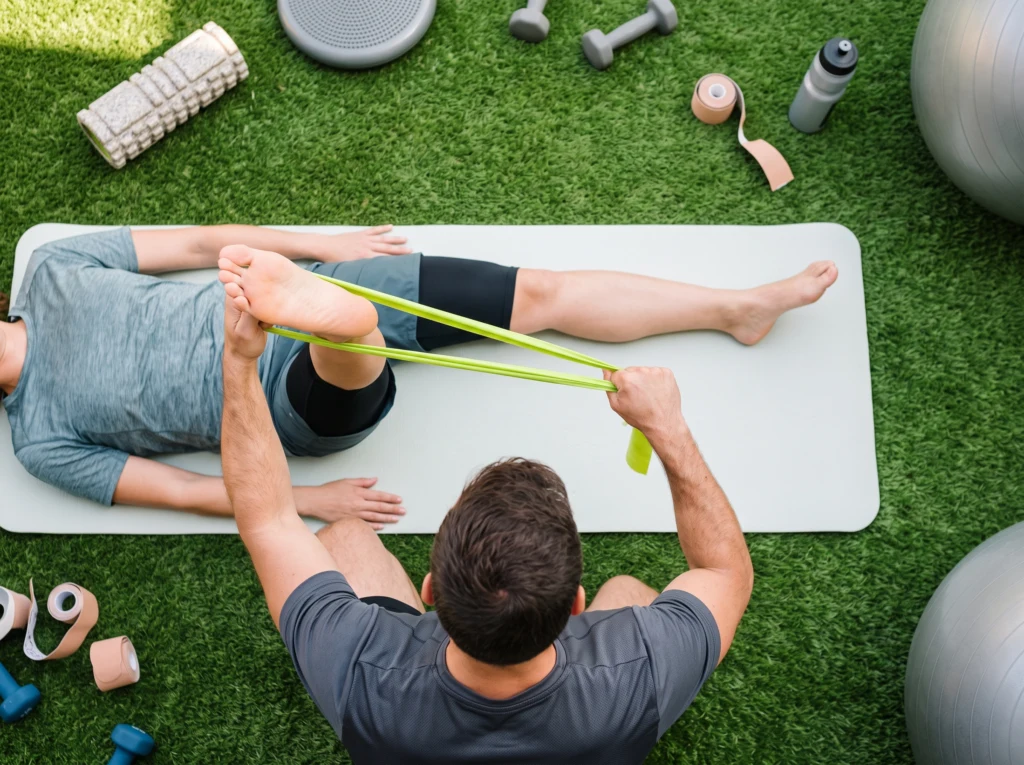
Kinesitherapy is active treatment. You don’t lie back and wait for the treatment to work: you work with Kaloyan Zarkov on exercises for strength, mobility and balance. Where a joint is stiff or a muscle is tight, Kaloyan adds manual therapy, meaning he moves and relaxes the area with his hands. He is a kinesitherapist (physiotherapist) with over 10 years of practice and experience in orthopaedics, neurology and sport.
Which service to choose
- You’re having surgery on a knee, hip or shoulder: pre-operative rehabilitation. With stronger muscles, the first weeks after the operation are easier.
- You’ve recently had surgery or a fracture: post-operative rehabilitation, always within the timelines set by your surgeon.
- An MRI or CT scan shows a slipped disc in your lower back or neck: kinesitherapy for a herniated disc.
- The pain burns, “shoots”, or runs down your leg or arm, for example with sciatica: kinesitherapy for nerve pain (neuralgia). Kaloyan looks for where the nerve is irritated.
- Your child slouches, or you sit all day and your back hurts: corrective exercises.
Kinesio taping is an add-on to treatment. The elastic tape supports the joint or muscle between sessions and during sport.
How a course goes
The first session starts with a conversation and an examination: how long you’ve had the pain, what makes it worse and how you move. Bring your scans and test results, the discharge summary from the hospital and comfortable clothes. Most patients come 2–3 times a week, or 1–2 times every 2 weeks for corrective exercises. Between sessions you do a short programme at home, which is as important as the work at the practice.
If you don’t know where the pain comes from, or whether you need kinesitherapy, massage or device-based physiotherapy, start with a consultation.