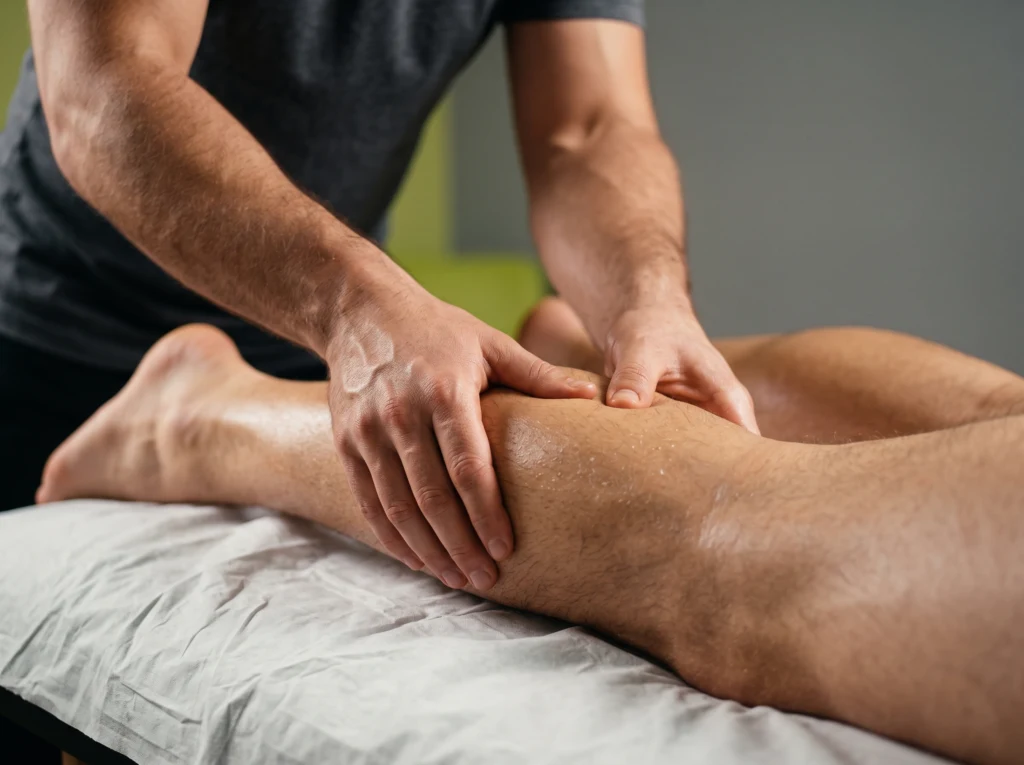
Partial sports massage is a sports massage of one area of the body. Most often it’s a sports massage for the legs (calves and thighs) or for the back and shoulders. It suits you when you train regularly and one muscle group works harder than the rest. Kaloyan Zarkov has worked with sports clubs and knows which muscles each sport loads, so all the time goes to the area that feels tight.
What to expect
When you book, or at the start of the appointment, say which area you want, what sport you do and when your next competition or hard session is. The massage is on a treatment table, with oil, and you only undress that area.
Kaloyan alternates quick and deeper strokes, holds pressure on tight spots and adds stretching. He can also use the same warmed Ergon tool as in the full-body sports massage: a fascial blade, which loosens the tissue around the muscles (the fascia), and vibration. The pressure is firmer than in a relaxing massage. If it’s too firm, say so and he will ease off. The next day the area may feel slightly tender, as it does after a workout.
How it differs from sports massage and partial body massage
The difference is in how much of the body is massaged and in the aim. Sports massage covers the whole body and is the better choice in a hard training period or before a competition. Partial sports massage is the same kind of work, but for one area only, for example the calves after running or the shoulders after swimming. Partial body massage is also for one area, but it isn’t linked to training: it suits a stiff neck and back from desk work, with the pressure you choose.
Who is this massage for?
- You run or cycle and your calves and thighs are always tight.
- You swim, play tennis or lift weights and your shoulders and back are slow to recover.
- The same area feels tight after every workout, while the rest of your body is fine.
- You want a massage between training sessions without making time for a full-body massage.
When it isn’t suitable
- In the first days after a strain, tear or sprain. The injury needs assessing first, not a massage in the area.
- With bruising, swelling or a skin infection in the area.
- With a fever.
- With varicose veins or thrombosis, if the area is the legs.
- With pain that gets worse under load and doesn’t ease with rest. You need an examination first.