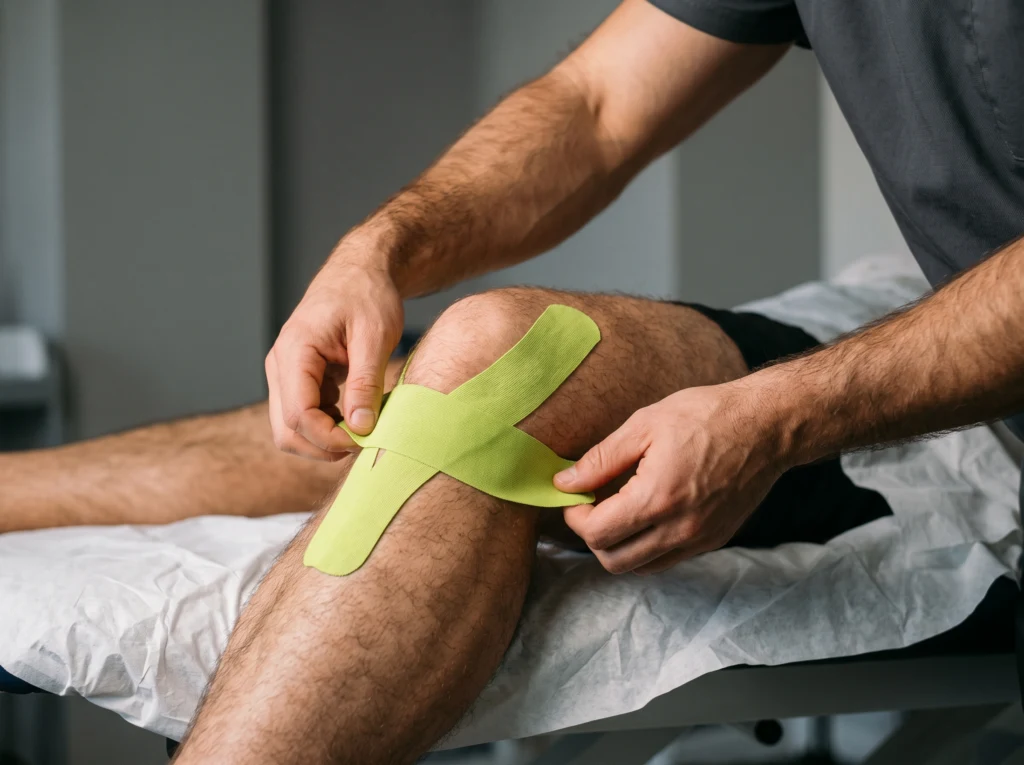
Kinesio taping means applying an elastic cotton tape to the skin. Kinesio tape supports a joint or muscle and gently lifts the skin, without limiting movement the way a rigid bandage does. It is used for pain, swelling and when you need support during sport or daily activities. Kaloyan Zarkov has taken a specialist course in kinesio taping. The price is for one area and includes the tape.
What to expect
Kaloyan first asks what is bothering you and checks how the area moves. Then he chooses the taping method: to support the joint, to relax the muscle or to reduce swelling. The tape is cut to size and applied with the joint in a set position and with a set amount of stretch. The whole thing is quick.
The tape feels like light support and doesn’t stop you moving. You usually keep it on for 3 to 5 days. You can shower with it on; afterwards, just pat it dry with a towel. The skin must be clean, dry and free of cream, and if the area is hairy, it’s best to shave it the day before.
On its own, kinesio taping is rarely the whole treatment. It works best together with kinesitherapy (exercise and manual therapy), massage or exercises.
What it helps with
- Knee pain when running or climbing stairs
- An unstable ankle after a sprain
- Shoulder pain when lifting the arm
- Lower back pain from standing for a long time
- Swelling and bruising after an injury (lymphatic taping)
- Tennis elbow and wrist pain
Who it’s for
- You play sport and want support for the joint during training or competition.
- You are recovering from an injury and need support between sessions.
- You have swelling after an injury or surgery, once the wound has healed.
- You want a reminder to keep good posture while you work.
When it isn’t suitable
- On a wound, a graze or irritated skin.
- If you are allergic to adhesive, or your skin is very thin and sensitive.
- If a blood clot (thrombosis) in the area is suspected.
- If your skin starts to itch or turns red, take the tape off.